Great writing starts with having something you want to say. I worry that our recent over-reliance on English schemes is squeezing the joy out of writing, making it feel repetitive rather than creative and exciting.

The research…
Perhaps the most important message is that we need to stop thinking of engagement as the fluffy bit of writing instruction. Being joyful about writing does not mean lowering expectations, abandoning explicit teaching or allowing children to write whatever they fancy. The research points instead towards something much more powerful: high-quality instruction and high levels of motivation need to work together.
The National Literacy Trust (NLT) has established a definitive, data-backed link between a child’s writing enjoyment and their overall academic achievement, frequency of writing, and mental well-being.
Engagement isn’t the fluffy bit around the edges of writing. It’s the fuel that gets children writing in the first place.
A really useful 2024 systematic review by Aline Alves-Wold, Bente Rigmor Walgermo, Erin McTigue and Per Henning Uppstad looked at a simple but important question: what makes primary-aged children want to write?
The researchers started with 5,795 studies and eventually focused on 56 studies involving children aged roughly 5 to 11. Most importantly, they looked at research which included the children’s own views about what motivated them to write.
From this, they identified nine things that repeatedly influenced children’s motivation to write. They called them the ABCs of Writing Motivation:
- A – Appeal: Is the writing interesting, enjoyable and meaningful?
- B – Beliefs: Does the child believe,“I can do this. I can be a writer”?
- C – Choice: Do children have some choice and ownership over their writing?
- D – Difficulty: Is the writing challenging enough to be interesting, but achievable enough to avoid frustration?
- E – Environment: Does the classroom feel like a positive and safe place to write?
- F – Feedback: Does feedback help children recognise what they have done well and how they can improve?
- G – Goals: Do children know what they are working towards and see themselves making progress?
- H – Help: Are children given the modelling, scaffolding and support they need to succeed?
- I – Instructor: Does the teacher create a classroom culture where writing is valued, purposeful and enjoyable?
One finding particularly stands out – appeal featured in 30 of the 56 studies. Children were more motivated to write when they found writing interesting, enjoyable and engaging.
The message isn’t that we should teach less. Children still need explicit teaching, modelling and feedback. But the research reminds us that how children feel about writing matters too.
Some oldies are goodies
We are always looking for the next thing in education, but perhaps some of the answers are sitting in ideas we quietly stopped using. Film clips, mysterious suitcases, drama, picture books, illustrations, story maps, teachers in role and writing for real audiences are hardly revolutionary. But they gave children something to think about, talk about and care about before we asked them to fill a page.
Writing projects talk about moving children from learning to write towards becoming writers. That distinction still matters. Children need explicit instruction, secure transcription and careful sentence teaching, but they also need experiences, images, stories, choices and audiences that make them want to use those skills.
Perhaps we do not need a completely new approach. Perhaps we need to rescue some of the creativity we lost along the way.
Oldies but goodies: practical ways to get children wanting to write
- CLPE: Power of Pictures
Explore the Power of Pictures teaching sequences
Use a high-quality picture book as the stimulus for writing. Reveal illustrations gradually, explore what the illustrator wants us to notice, draw before writing, role-play characters and create children’s own picture books. The CLPE sequences cover EYFS through KS2 and combine reading comprehension with children’s own composition.
Worth knowing: EEF’s evaluation found an average +1 month progress in writing, alongside positive effects on writing self-efficacy and creativity. - Pobble 365: one brilliant image can be enough
Explore Pobble 365
A free daily image accompanied by questions, vocabulary, story starters and short writing activities. Try displaying just the picture first. What do you notice? What do you wonder? What happened five minutes before this image? What happens five minutes afterwards? - My old Pobble! blog post
Read my original Pobble post
I was recommending this back in 2015, when it was developing from Lend Me Your Literacy. I particularly liked the combination of an image, deeper-thinking questions, sentence challenges and opportunities for children to publish their writing. - Once Upon a Picture
Explore Once Upon a Picture
A fantastic bank of unusual images specifically curated to stimulate talk, vocabulary, inference and creative writing. Particularly useful when you want children to have different interpretations rather than everybody writing essentially the same story.
There are now 600+ picture prompts, which can be filtered for description, inference, narrative, prediction and discussion. - Try “See, Think, Wonder” before anybody writes.
Once Upon a Picture’s older Fiction Collection captures this beautifully: What can you see? What do you think? What do you wonder? Build the ideas and vocabulary orally first, then write. Its Angry Ants example even combines an image with a slow-writing challenge using controlled sentence lengths. - Bring back Slow Writing.
Read my original Slow Writing blog
Give children a powerful photograph or film clip, then control each sentence dependent on the objectives you have covered recently. The constraint paradoxically gives children the freedom to concentrate on crafting their writing rather than worrying about what to write. - Use short films as texts, not just as entertaining writing prompts.
Pause, rewind and reread film just as we would a written text. Explore colour, sound, camera angle, setting, facial expression and pace. Then ask: How could an author achieve that same effect using only words? TheCGBros – YouTube - Francis: film to writing.
A brilliant KS2 example for teaching tension. I advise teachers to watch it first and decide whether its darker theme is appropriate for their class.
My own Francis blog explored explicitly how children could translate the techniques of the filmmaker into those of a writer: darkness, silence, anticipation, clues, changes in pace and suddenly short sentences. Francis… – TheLiteracyLeader. - Remove the ending.
Show three quarters of a short film, picture sequence or picture book and stop. Children predict, orally rehearse and write the missing ending before seeing the author’s/director’s version. Then compare the creative decisions. - The mysterious object.
Put an old suitcase, key, photograph, map, shoe, diary or sealed envelope in the classroom. Don’t immediately explain it. Let children investigate it, ask questions and construct possibilities. Curiosity can create the need to write. - The picture-book page with no words.
Find a powerful double-page spread and cover the text. What would you write? Reveal the author’s version afterwards. Which is more effective and why? This fits strongly with the rationale behind Power of Pictures, which explicitly develops understanding of how words and illustrations work together to create narrative. CLPE Power of Pictures | LoveReading4Kids - Give them the final sentence first.
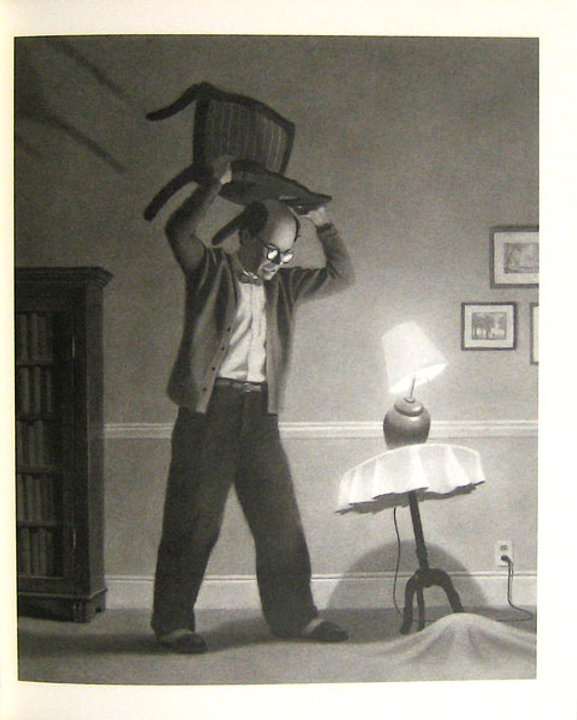
Put something like “And that was the last time anyone ever opened the red door.” on the board. The children’s job is to write the story that makes that ending inevitable. Using books like The Mysteries of Harris Burdick can be a great stimulus. - Freeze-frame into writing.
Groups physically recreate a moment from a book or film. Walk around the tableau collecting vocabulary. Thought-track individual characters. Collect what can be seen, heard, felt and wondered. Only then ask children to write the scene. Activity Ideas for Drama at Key Stage 1.pdf - Write for someone real.
Make the audience authentic: Year 6 ghost stories for Year 5; Year 4 picture books for Reception; instructions genuinely followed by another class; persuasive letters actually sent; stories recorded for younger pupils. Writing changes when children know someone is actually going to read it. - Bring back seven-minute writes.
Explore my old writing ideas on The Literacy Leader
My old blog includes 7 minute writes…getting creative quickly! (alongside posts on film, dragons, picture books, slow writing and other creative approaches).
Give children seven minutes and an irresistible starting point. No success criteria. No marking checklist. No twenty-minute explanation. Just write. Afterwards, share favourite sentences and celebrate what worked.