
Does something this simple really work?
It seems no matter how hard we try, and how hard our children try, the reading SAT in Year 6 is just a challenge too far for quite a few of them. There are many potential reasons for this, some are new to country, new to English, speak English as an additional language, are refugees who have missed years of education, are new to school in KS2, and some do not read or listen to stories at home.
We have tried every intervention going. We measure the impact of every single one on a regular basis. Our curriculum is book rich. Oracy is high on our agenda and we aim to be a ‘Voice 21 Oracy Centre of Excellence’ by the end of this year. Voice 21 Oracy Centres of Excellence – Voice 21
We are painfully aware that if children are not reading at age-related expectations, the next stage of their education at secondary is incredibly challenging. So, I am constantly researching new, impactful approaches to making accelerated progress, and I stumbled across an article on ‘Faster Reading’. The approach was backed up by research at Sussex University, and Mary Myatt shared some fabulous videos and blogs about the approach. It seemed ridiculously simple, yet hugely impactful. Pupils were making months of progress in only twelve weeks. I felt I had to try it.
Case study: The Faster Read programme at… | Huntington Research School
We started in Summer 2 so only had chance to try it with one novel and 6 weeks in years 5 and 6. We assessed every pupil first using a Salford Reading and Comprehension test. A big group of pupils were reading below their chronological reading age.
www.risingstars-uk.com/series/salford-sentence-reading-test
The novels we chose were challenging and many children would not have accessed them independently. I asked our local School Library Services for suggestions and borrowed class sets from them, which meant it was economical too! Their expert advice was invaluable.
www.leedsforlearning.co.uk/Page/31833
We chose ‘Tyger’ by S. F. Said for Year 5 and ‘The Explorer’ by Katherine Rundell for Year 6. They LOVED them!
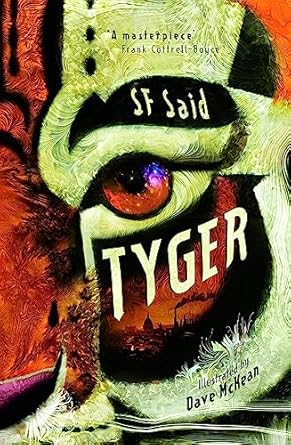
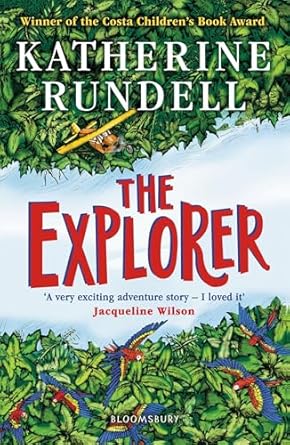
Each class were read to for half an hour each day until the novel was finished – this was only a 15 minute extension of story-time so it had a minimal impact on the timetable. The class followed along with the teacher reading the story. The pace was quite quick with only brief explanations of some vocabulary. It was quite a passive activity for the children as they let the story wash over them. They were free to enter the world of the story without there being in-depth questioning or a written response. We still did a daily guided reading session and an English lesson, but the texts and activities were not linked to the Faster Reading novel.
After six weeks we had finished one novel in each year group but had almost run out of time to assess all the children again – it was the last week of term! To measure impact we assessed only those with initially low reading ages – next time we will assess everyone!
These initial results have been remarkable. 23 children made progress (remember we didn’t re-assess all 60) in reading age ranging from 1 month to 8 years!! 12 made over a years progress in reading age and increased their comprehension scores in 6 weeks! Ridiculous isn’t it, that something so simple and soooo pleasurable has such a measurable impact?! The children who made the most progress were those who were new to English or new to country – often 4 years or more.
Needless to say we will continue to use this approach in the Autumn term. This time all of KS2 will do Faster Reading between 1 and 1.30 every afternoon. They will read two challenging novels over 12 weeks and then we will measure the impact. I will encourage staff to let the children doodle as well as follow the story with their own copy of the book to support visualisation. I am very excited because whatever the progress the children will get to experience so many more stories, which can only be a good thing! I will let you know how we get on.
 TheLiteracyLeader.